Fedasen in the Spotlight

Public Works Conference Victoria
13-15 May 2026 | Melbourne, Australia
AI-Driven Road Asset Management:
A Case Study for the Victorian Department of Transport and Planning
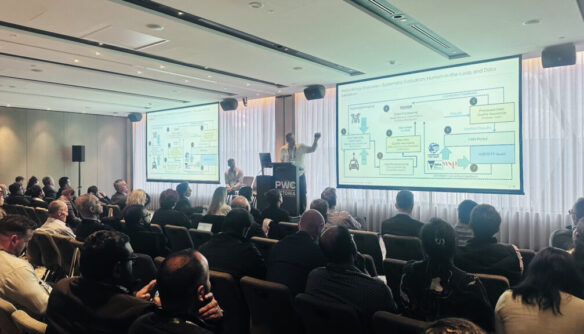
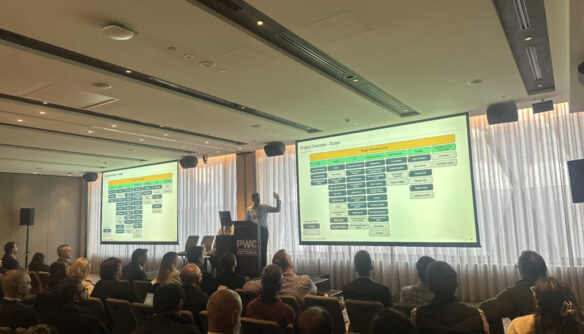
FEDASEN, in collaboration with the Victorian Department of Transport and Planning (DTP), successfully presented a landmark case study at IPWEA PWC VIC 2026, demonstrating how artificial intelligence is transforming road asset management across Victoria.
The presentation showcased one of Australia’s most ambitious AI-enabled road infrastructure initiatives, where advanced imaging, machine learning, and geospatial technologies were deployed across more than 24,000 kilometres of the state’s road network. This large-scale program enabled the detection, classification, and mapping of millions of roadside assets with exceptional speed and precision.
A key focus of the session was the project’s innovative methodology, which combined multimodal data capture (ground vehicle and drone), AI-driven processing, and high-accuracy geospatial mapping. The approach was further strengthened by rigorous multi-layer validation processes, ensuring reliable and defensible outputs at scale.
Through this integrated framework, the project successfully addressed long-standing industry challenges related to data quality, coverage, and efficiency. In just 18 months, over 2.7 million assets were accurately classified and delivered, highlighting the scalability and practical impact of AI-driven solutions in transport infrastructure management.
The session provided valuable insights for asset owners, infrastructure managers, and technology leaders, demonstrating how AI can significantly enhance decision-making, operational efficiency, and the overall reliability of road asset management at enterprise scale.
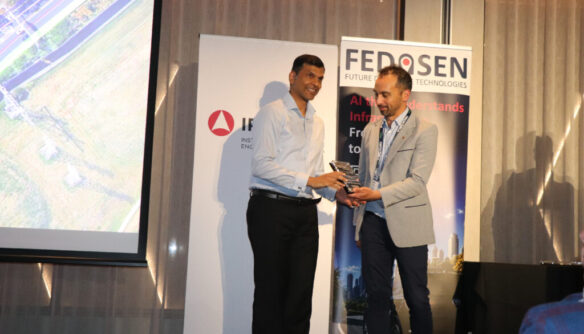
AI-Powered Road Condition Assessment for Baw Baw Shire Council
A Case Study
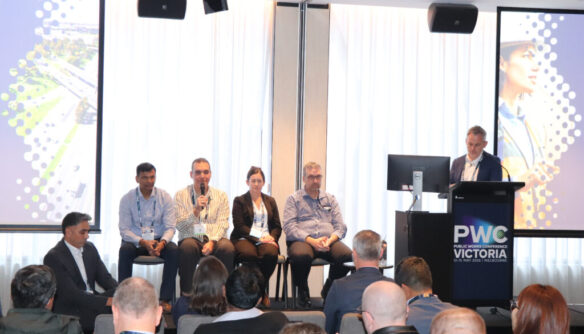
FEDASEN and Baw Baw Shire Council (BBSC) jointly presented a compelling case study at IPWEA PWC VIC 2026, showcasing how artificial intelligence is transforming road condition assessment for local governments.
The presentation highlighted how BBSC, one of Victoria’s fastest-growing peri-urban municipalities, is addressing the pressure to expand infrastructure, maintain service standards, and make defensible, data-driven decisions across a large, geographically dispersed road network.
A central focus of the session was the deployment of FEDASEN’s Intelligent Road Analyser (FiRA), which enabled network-wide, objective, and repeatable condition assessments. By moving away from traditional sample-based inspections, the solution introduced a more comprehensive and transparent approach to road condition monitoring. The methodology incorporated high-resolution 10-metre road segmentation, photographic evidence, and GIS-ready outputs, delivering granular insights and improved visibility across the entire network.
Through this scalable, AI-powered framework, BBSC demonstrated how councils can significantly enhance operational efficiency, optimise maintenance planning, and achieve cost-effective asset intelligence while managing growth. The case study clearly illustrated how innovative technologies are enabling local governments to do more with less while building a stronger foundation for long-term infrastructure planning and asset management.
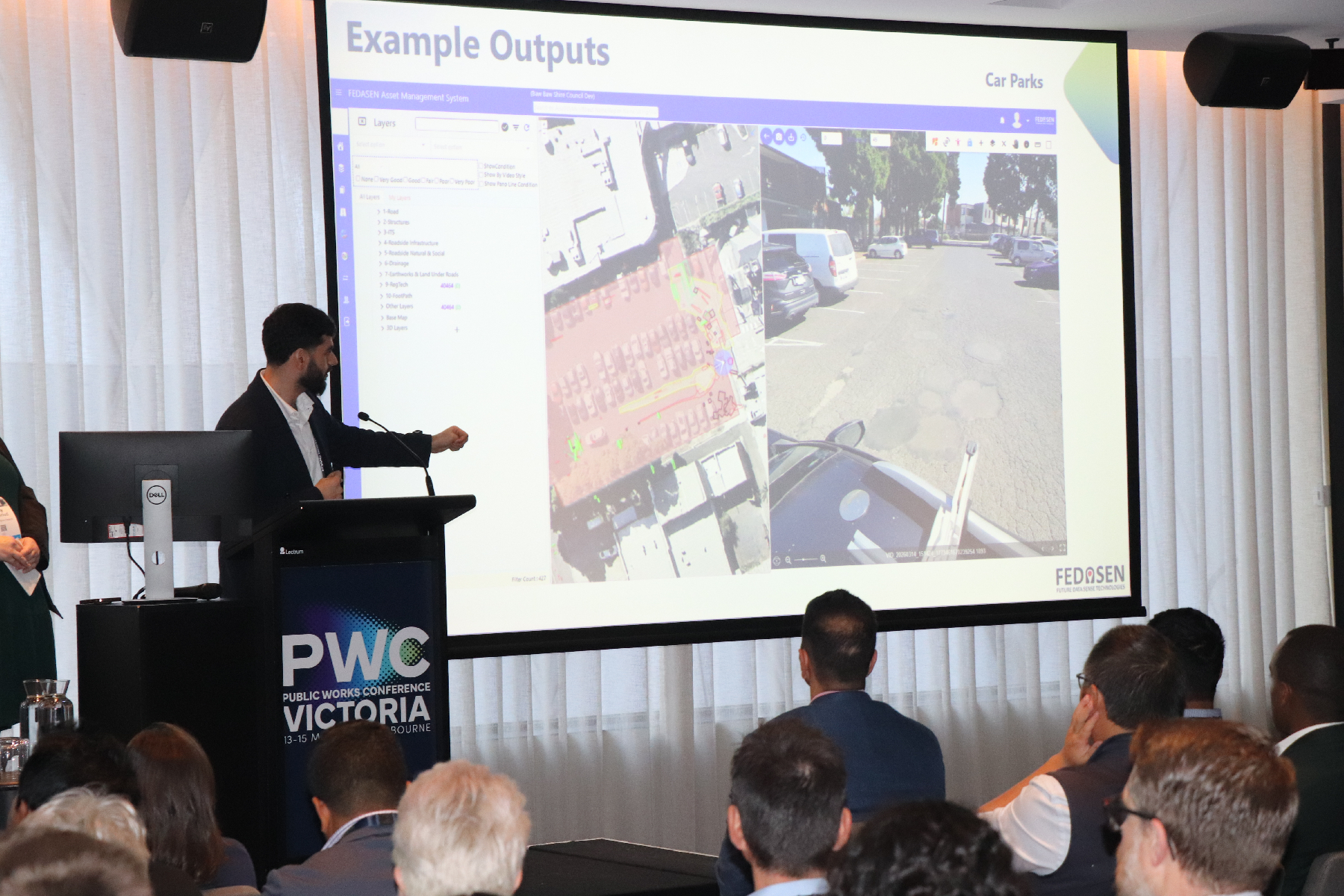
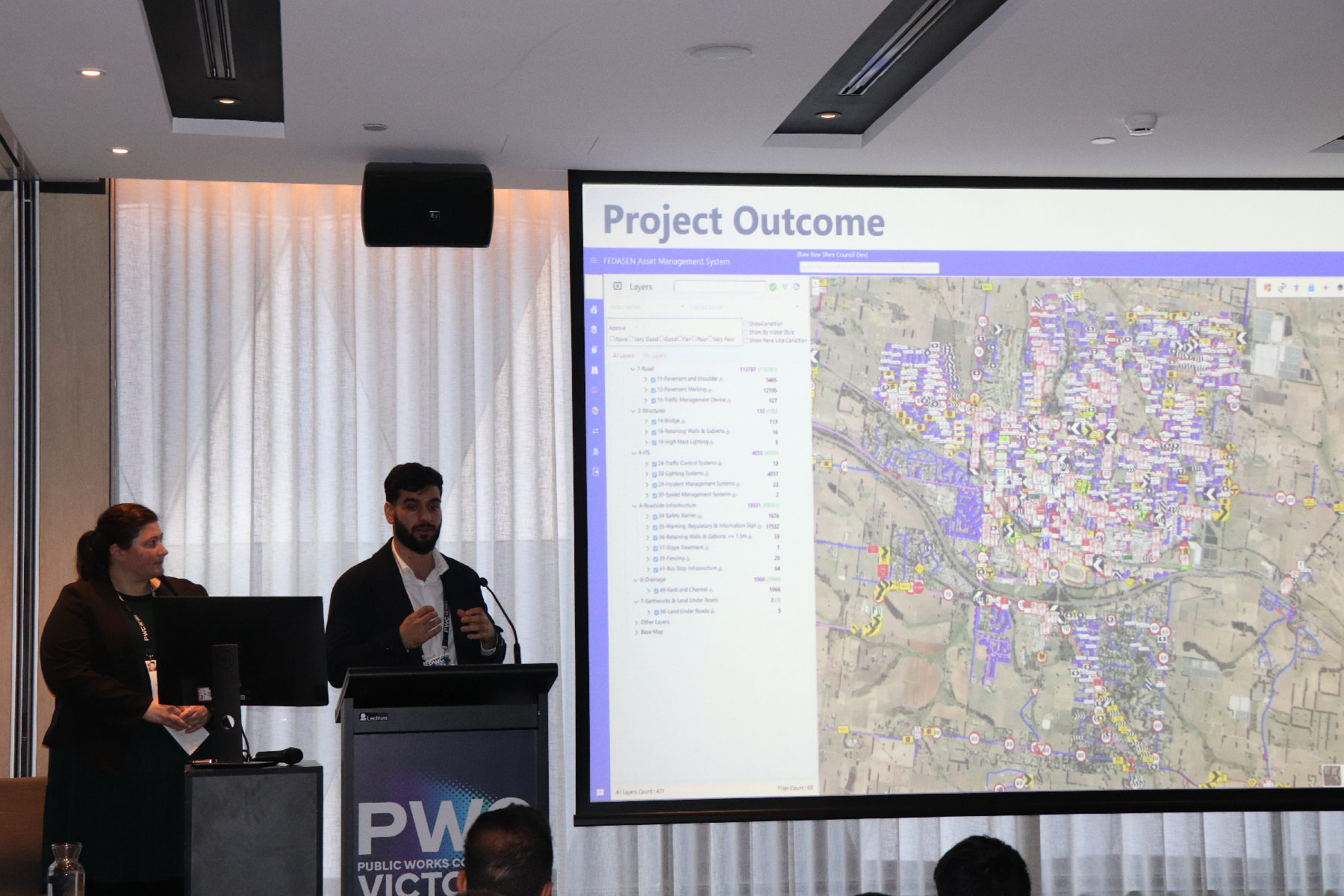
AI-Driven Road Asset Management: A Case Study for the Victorian Department of Transport and Planning (122952)
Nik Aloustani, Fedasen
Carmen Huynh, Department of Transport and Planning, Melbourne, VICTORIA, Australia

AI-Driven Road Asset Management: A Case Study for the Victorian Department of Transport and Planning
(Presentation)
The Victorian Department of Transport and Planning (DTP), in collaboration with Fedasen, has implemented the FiRA (Fedasen Intelligent Road Analyser) platform to enhance road asset management through the use of AI, deep learning, and geospatial technologies. FiRA automates the detection, classification, and condition assessment of road assets using aerial imagery and 360° video, achieving near-complete coverage and 99.96% data accuracy. Within 18 months, over 2.5 million assets across 138 types were classified and georeferenced, significantly improving data quality and aligning with DTP’s asset hierarchy standards.
The project was presented at the IPWEA International Public Works Conference 2025 (IPWC 2025) by Fedasen and DTP.
Nik Aloustani, Fedasen
Carmen Huynh, Department of Transport and Planning, Melbourne, VICTORIA, Australia

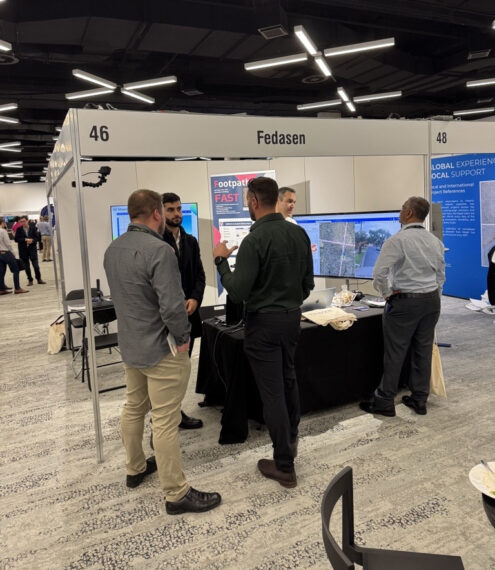

Active Assessment of Footpath and Bikeway Networks: A Case Study of AI-Driven FAST Technology Implementation (122985)
Nik Aloustani, Rastin Zarrin, David Paine
FEDASEN, Sydney, NSW, Australia
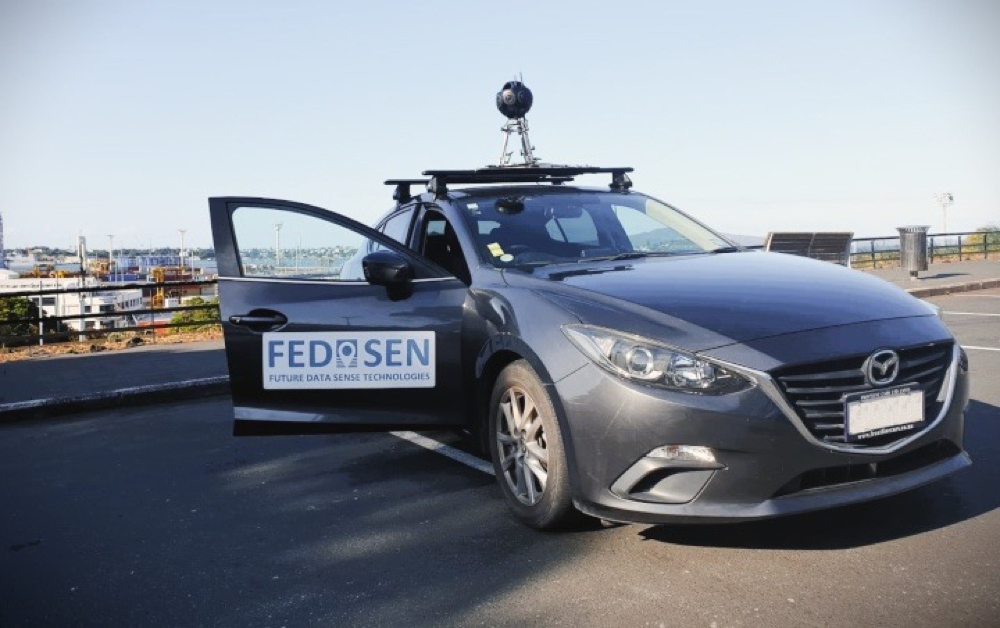
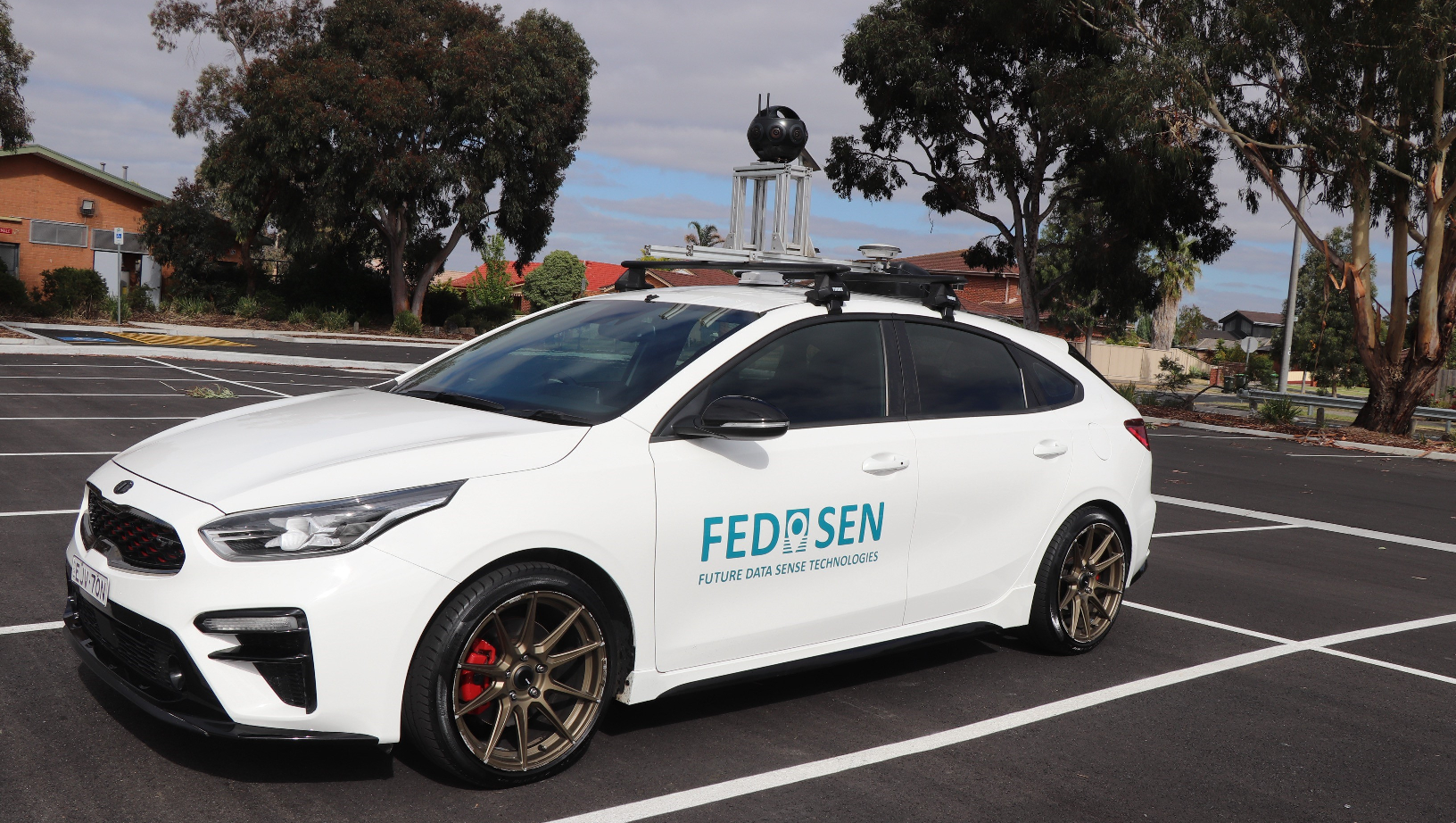
Fedasen Makes Road Maintenance Easier Than Ever Using 360 Cameras
Traditional road maintenance typically involves sending out teams to conduct in-person inspections of roadways. This is time-consuming, expensive and bad for the environment. Australian road mapping software company, Fedasen, is here to bring road maintenance into the 21st century.
…
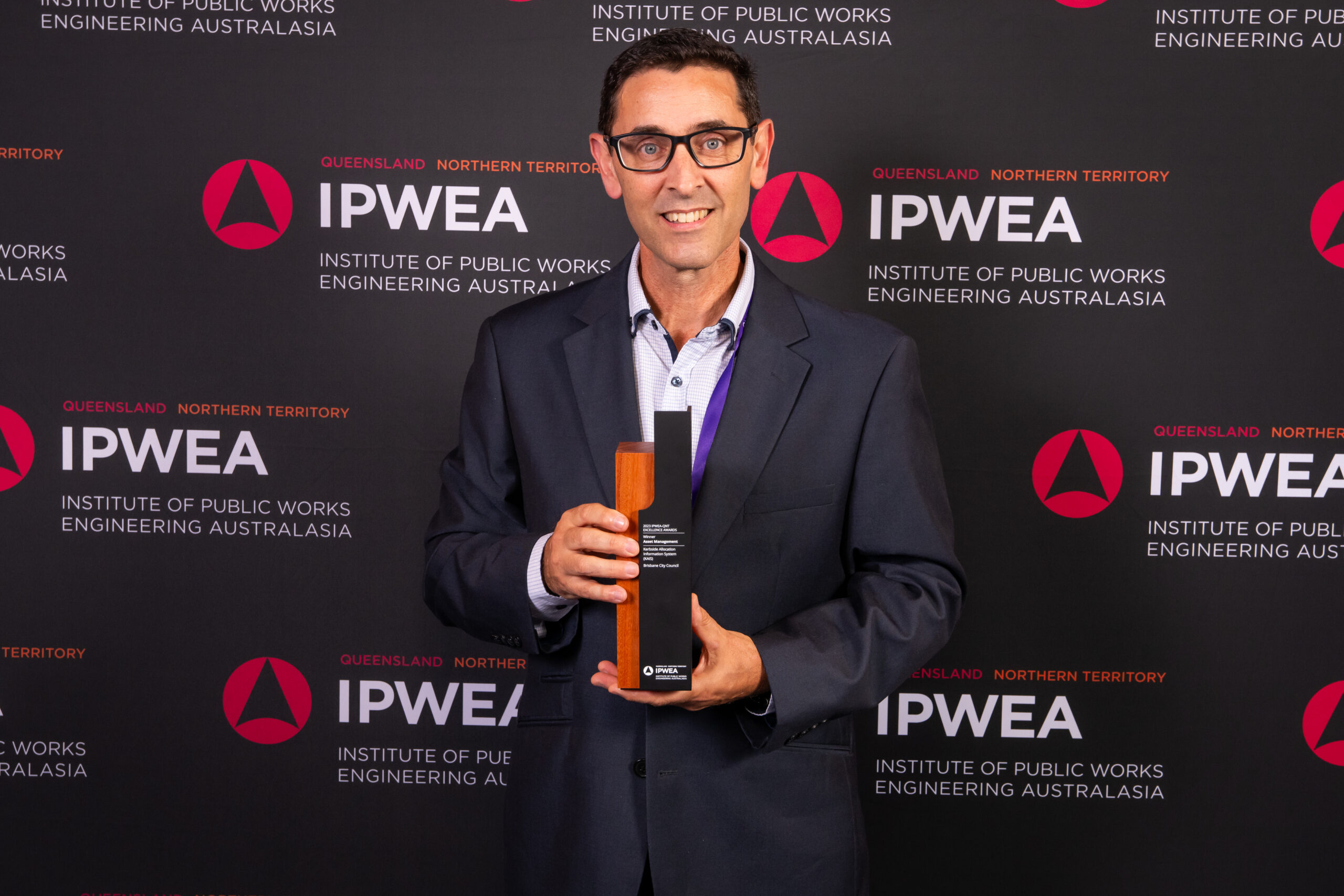
KAIS Wins IPWEA-QNT Excellence Award for Asset Management
We’re proud to announce that KAIS (Kerbside Allocation Information System) has been awarded the 2023 IPWEA-QNT Excellence Award in the Asset Management category.
KAIS is a tailored solution built on Fedasen’s FiRA platform, specifically developed for Brisbane City Council to support advanced parking management. By integrating up-to-date data, geospatial intelligence, and intuitive user interfaces, KAIS empowers council teams to make smarter, data-driven decisions about kerbside space allocation and usage.
This recognition highlights KAIS’s innovative approach to urban asset management and its impact on improving operational efficiency, community accessibility, and sustainable transport planning.
AI-assisted technology will capture kerbside data on Auckland’s roads
Auckland Transport (AT) has begun collating a full dataset of kerbside space allocation using AI-assisted technology called the Intelligent Road Analyser (IRA).
The platform is revolutionising kerbside and road asset data collection in Auckland by delivering a comprehensive GIS dataset that identifies all parking restrictions and signage across the city’s roads.
Using AI, machine learning, computer vision, and geospatial technologies, IRA enables fully automated, high-resolution data capture via roof-mounted ultra-HD cameras and GNSS/GPS receivers on standard vehicles—eliminating the need for manual inspections or traffic management.
Note: Fedasen’s IRA was late and was renamed to FiRA.